Description
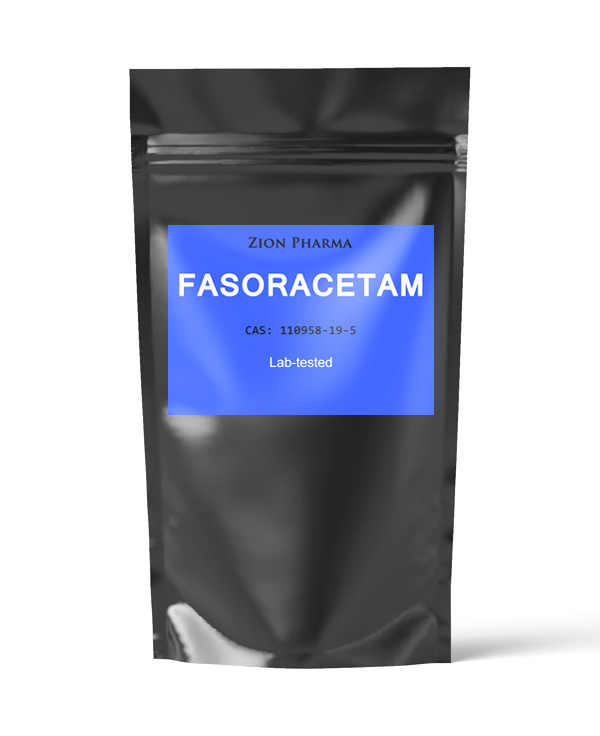
Fasoracetam
SKU: fasoracetam
For precise measurement, we recommend using a laboratory scale.
The product is not intended for human use. For collectors, hobbyists, education and research.
Fasoracetam, as the name suggests, is a member of most widely known family of nootropics – the racetams, based around the 2-pyrrolidone structure. Whilst many compounds are currently pronounced nootropic or being investigated for their procognitive properties, the racetams are considered prototypical in that matter in that they exhibit direct effects on the central nervous system through multiple mechanisms. In fact, the term „nootropic” itself was coined by Corneliu E. Giurgea, the man who synthesized piracetam in 1964. As a cyclic derivative of gamma-aminobutyric acid (GABA), he originally expected piracetam to possess significant anxiolytic properties, however it turned out to display powerful procognitive action instead.
Its relatively young relative fasoracetam (synthesized in the late ‘80s), created with the treatment of vascular dementia in mind, showed some unique characteristics due to which it was repurposed as a candidate drug for ADHD, severe autism, DiGeorge syndrome and major depressive disorder.
As other racetams, fasoracetam has a positive effect on acetylcholine levels in the brain. While it ehnances the release of acetylcholine in the cerebral cortex and hippocampus, it also increases its bioavailability by stimulating the process known as high-affinity choline uptake (HACU). The later translates to more efficient absorption of acetylcholine precursors into neurons, whereas together it implies higher turnover of the neurotransmitter.
Fasoracetam has been shown to activate metabotropic glutamate receptors (mGluR), type of glutamate receptor found both on presynaptic and postsynaptic neurons, which is also present on glial cells that play a modulatory role related to slower glutamatergic transmission via intracellular messenger systems. Bascically, they are responsible for synaptic transmission and plasticity. It is also the only racetam known to increase the synthesis of adenosine monophosphate (cAMP), a molecule that plays a crucial role in intracellular signaling pathways and participates in a variety of physiological changes in the body. It also lowers the threshold potential of HCN channels, located in the hippocampus, thus activating them. It is hypothesized that the memory enhancement, memory loss prevention and increased neuroplasticity observed with fasoracetam is achieved through these mechanisms.
There is, however, one finding of greater importance when it comes to fasoracetam, namely that it has been found to increase the density of GABA-B receptors in the cerebral cortex. Moreover, it enhances their responsiveness by upregulation which takes place over time. A study on mice has demonstrated that fasoracetam is able to counteract learned helplessness.
Therefore, while fasoracetam seems to have limited efficacy in the treatment of ADHD (it has proven to be effective in people with specific mGluR mutations, which make ca. 10% of total ADHD cases), its true value lies in its anxiolytic potential and its capacity to enhance neuroplasticity. It is consistent with anecdotal evidence, as fasoracetam users often report peace of mind and a lucid state of inner calm in relative absence of anxiety. As such, it might serve as a study aid, an alternative to stimulants for people who do not tolerate them well due to high anxiety levels or cannot take them due to medical contraindications.
The way fasoracetam affects GABA-B receptors has significant implications, since it means this compound could potentially be useful for those willing to limit their alcohol intake, and it would also help restore neurochemical balance after prolonged abuse of drugs that work on GABA-B, and possibly also reduce certain withdrawal symptoms.
Fasoracetam has also been reported to potentiate phenibut.