Description
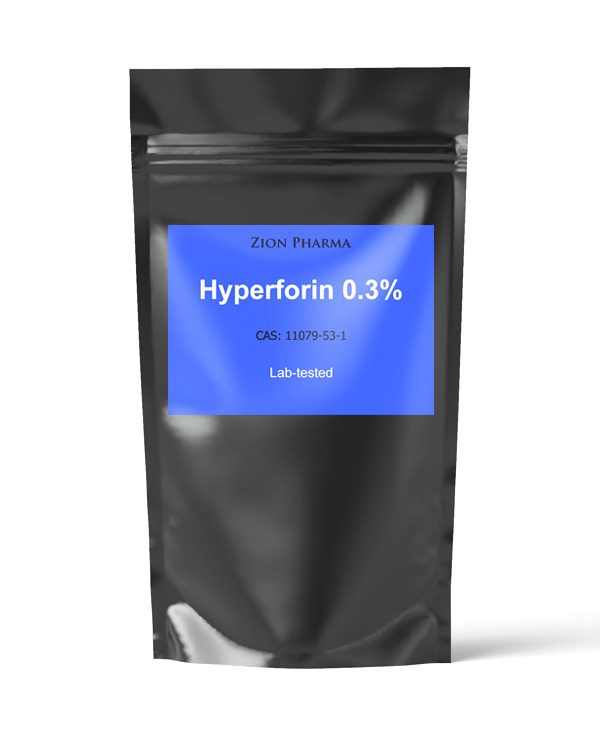
Hyperforin 0.3%
We store our Hyperforin at about -15°C.
SKU: hyperforin
ATC CODE:
A micro spoon is added to Hyperforin (0.15 ml) = 80 mg (approximately).
For precise measurement, we recommend using a laboratory scale.
The product is not intended for human use. For collectors, hobbyists, education and research.
Hypericum perforatum, widely known as St. John’s Wort is a perennial plant of the Hypericaceae family, with a history of use in natural medicine dating back to ancient times. In fact, Hippocrates, often referred to as “The Father of Medicine,” expressed his interest in its therapeutic properties.
Currently, St. John’s Wort is among the most popular and scientifically studied herbal antidepressants, with efficacy comparable to pharmaceutical antidepressants for mild-to-modarate depression. It is also often used to relieve anxiety, insomnia and sometimes Seasonal Affective Disorder (SAD).
Whereas originally, hypericin was believed to be the main active ingredient, contemporary research identified a different phytochemical, hyperforin, as the primary active constituent of St. John’s Wort extract. While it acts as a triple reuptake inhibitor (serotonin, norepinephrine, and dopamine), resembling experimental, potential next-generation antidepressants, hyperforin turns out to be an even broader-spectrum inhibitor of neurotransmitter reuptake, effectively blocking the reuptake of GABA and glutamate, which might be an entirely novel mechanism of action. By increasing GABA activity, it boosts stress resistance and emotional stability, promotes a healthy attitude toward problems, and reduces mood fluctuations. Raising glutamate levels, on the other hand, it facilitates new information acquisition.
Furthermore, hyperforin has been found to mimic brain-derived neurotrophic factor (BDNF) in the hippocampus, a brain region proven to deteriorate in chronic depression. Hyperforin binds to and activates TRPC6 (Transient Receptor Potential Channel 6), allowing sodium and calcium ions to enter neurons, while according to recent studies, TRPC6 deficiency in mice results in anxious and depressive behavior.
Hyperforin has been demonstrated to disaggregate amyloid deposits in a dose and time-dependent manner and to decrease Aβ aggregation and amyloid formation in rats, leading to speculations of its capacity to slow the progress of Alzheimer’s.
It is also worth mentioning that hyperforin enhances mitochondrial function in neurons, which translates io increased energy production and optimized nerve impulse transmission.
As it turns out, hyperforin supports the immune system, stimulating the activity of NK (natural killer) cells that detect and destroy pathological cells. Thanks to its antibacterial and antiviral prpoerties, it may prevent specific types of infection from spreading. At the same time, as an antioxidant, it protects the system from excessive inflammation.
Anecdotal reports from St. John’s Wort/hyperforin users highlight greater mental clarity, a more positive outlook on life, and lower tendency to procrastinate.