Description
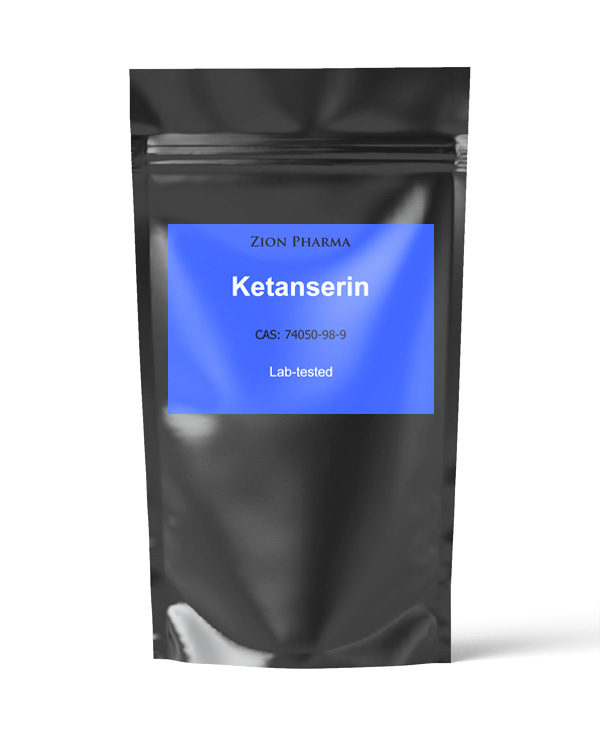
Ketanserin
SKU: ketanserin
A micro spoon is added to Ketanserin (0.15 ml) = 25 mg (approximately).
For precise measurement, we recommend using a laboratory scale.
The product is not intended for human use. For collectors, hobbyists, education and research.
Ketanserin, sold under the brand name Sufrexal, is a selective 5-HT2A receptor antagonist that was initially developed as an anti-hypertensive agent used to treat arterial hypertension and vasospastic disorders, discovered at Janssen Pharmaceutica in 1980. It was the first serotonin 5-HT2A receptor antagonist to be discovered that showed selectivity over other serotonin receptors.
Its other applications include reversing pulmonary hypertension caused by protamine (administered to reverse the effects of heparin overdose) as the reduction in hypertension is not associated with reflex tachycardia, and cardiac surgery. It is also used in scientific research as an antiserotonergic agent in the study of the serotonin system; specifically, the 5-HT2 receptor family.
Ketanserin acts as a selective antagonist of the serotonin 5-HT2A, α1-adrenergic, and histamine H1 receptors. It also shows lower affinity for various other targets. With tritium (3H) radioactively labeled ketanserin is used as a radioligand for serotonin 5-HT2 receptors, e.g. in receptor binding assays and autoradiography. This radio-labeling has enabled the study of serotonin 5-HT2A receptor distribution in the human brain.
Ketanserin has also been used with carbon (11C) radioactively labeled NNC112 in order to image cortical D1 receptors without contamination by 5-HT2 receptors. Additionally, it is available as a topical gel formulation for treating wounds, burns, ulcers, and anal fissures, as it accelerates epithelialization.
Increasing research into the use of psychedelics as antidepressants has seen ketanserin used to both block the hallucinogenic experience, and to disentangle the specific cognitive effects of 5-HT2A activation. Ketanserin has been found to block the psychedelic effects of psilocybin, lysergic acid diethylamide (LSD), mescaline and ayahuasca (dimethyltryptamine) in clinical studies.