Description
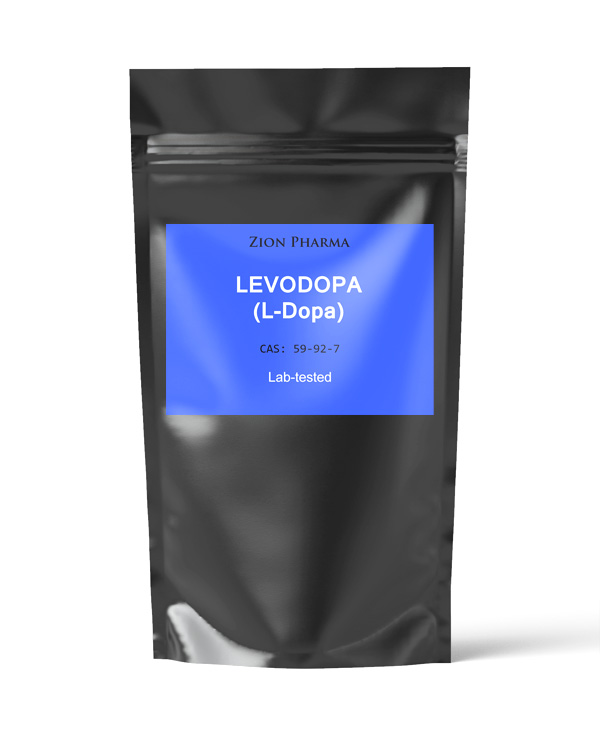
L-Dopa (Levodopa)
SKU: levodopa
For precise measurement, we recommend using a laboratory scale.
The product is not intended for human use. For collectors, hobbyists, education and research.
Levodopa, also referred to as L-DOPA and marketed under various brand names, is a dopaminergic agent utilized in the management of Parkinson’s Disease (PD) as well as other conditions such as dopamine-responsive dystonia and restless legs syndrome. From a chemical perspective, L-DOPA is classified as an amino acid, specifically a phenethylamine and a catecholamine. The compound was first synthesized in 1911 by Torquato Torquati, and subsequently isolated in 1913 by Marcus Guggenheim from the fava bean plant. Nowadays, as a dietary supplement, it is available as botanical extract from the velvet bean (Mucuna pruriens), containing 3–7% L-DOPA by weight.
Unlike oral dopamine, L-DOPA bypasses peripheral metabolism (when combined with carbidopa), crosses the blood-brain barrier via LAT1 transporters. As a direct precursor, it is converted to dopamine via dopamine decarboxylase (DDC). Currently, it is considered gold-standard treatment for Parkinson’s disease (PD), as it replenishes striatal dopamine. The administration of this medication typically occurs in conjunction with a peripherally selective aromatic L-amino acid decarboxylase (AAAD) inhibitor, such as carbidopa or benserazide in order to mitigate the risk of its side effects. L-DOPA modulates norepinephrine and epinephrine via dopamine beta-hydroxylase, potentially also serotonin through competition for aromatic L-amino acid decarboxylase. The primary cause of increased risks associated with levodopa-induced dyskinesia (LID) is the gradual degeneration of nigrostriatal dopaminergic neurons. This degeneration leads to the transformation of levodopa into dopamine within serotonergic neurons, which lack the ability to reabsorb dopamine and do not possess adequate regulatory mechanisms for dopamine production. Consequently, these serotonergic neurons become the principal source of dopamine in the dorsal striatum, resulting in significant fluctuations in striatal dopamine levels following the pulsatile oral administration of levodopa. Conversely, in conditions such as Segawa disease, where dopamine synthesis is diminished but there is no ongoing degeneration of dopaminergic neurons, the long-term use of low doses of levodopa is thought to be free from severe adverse effects.
According to animal studies, L-DOPA upregulates BDNF in dopaminergic regions (e.g., substantia nigra), yet, it is important to note that its chronic use desensitizes D₂ receptors, leading to tolerance and dyskinesias in Parkinson’s Disease. Since ADHD and executive dysfunction are linked to dopamine deficiency in prefrontal cortex, L-DOPA could potentially offer some improvements in the areas of motivation and focus, which is consistent with anecdotal reports that also mention improved task initiation (in a manner similar to stimulants, albeit smoother). Certain studies show rapid but short-lived antidepressant effects in depressive patients. While some individuals with Autism Spectrum Disorder use it for low motivation, it is important to be aware of the risk of worsening stimming and repetitive, rigid behavior.
L-DOPA has been found to reduce perceived effort and improve athletic performance, and as such it is banned in competitive sports by the World Anti-Doping Agency (WADA). By increasing dopamine, it is believed to facilitate post-exercise recovery by suppressing prolactin secretion. L-DOPA is also sometimes used in the treatment of hyperprolactinemia (a common side effect of more traditional antipsychotics) and, due to the arousing effects of dopamine, hypoactive sexual desire disorder.
It should be noted that long-term use of L-DOPA leads to dopamine receptor downregulation and diminished effects. Furthermore, increased dopamine metabolism means a higher free radical generation rate and, consequently, an elevated risk of neurotoxicity.