Description
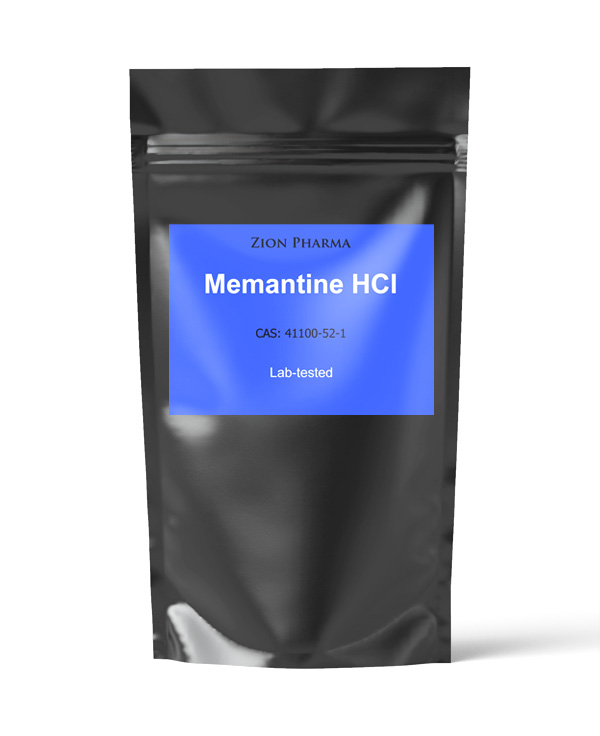
Memantine HCl
SKU: memantine
A micro spoon is added to Memantine (0.025 ml) = 10 mg (approximately).
For precise measurement, we recommend using a laboratory scale.
The product is not intended for human use. For collectors, hobbyists, education and research.
Memantine is a drug indicated for the treatment of moderate-to-severe Alzheimer’s Disease. Pharmacologically, it is a low-to-moderate affinity, uncompetitive NMDA receptor antagonist with voltage-dependent and fast kinetics (unlike ketamine, which has higher affinity and slower kinetics). It modulates NMDA receptor, blocking excessive glutamate-induced Ca²⁺ influx (and preventing excitotoxicity) while allowing physiological neurotransmission. Indirectly, it enhances prefrontal dopamine (D1/D2) and acetylcholine signaling, which may improve cognition and attention. Another of its mechanisms of action, σ-1 receptor agonism may contribute to neuroprotection, mood stabilization, and sensory processing modulation. Furthermore, memantine is also known to affect AMPA receptor trafficking, and might promote synaptic plasticity, albeit in a milder and more sustained manner than ketamine. Through 5-HT3 receptor, it potentially exerts further pro-cognitive and anxiolytic action.
It has been found slow cognitive decline in moderate-to-severe Alzheimer’s in a clinically relevant manner, which is more apparent in later stages of this condition.
Since NMDA dysfunction is implicated in sensory hypersensitivity, social deficits, and repetitive behaviors, some studies were conducted to assess the efficacy of memantine in Autism Spectrum Disorder (ASD), and observed improvements in irritability, social communication, and sensory gating. has been researched. Anecdotal reports highlight reduced anxiety, improved focus, and decreased sensory overload. Given that NMDA and dopamine modulation may improve working memory and attention, memantine has also been explored for its potential in the treatment of ADHD, especially in stimulant-resistant cases. While studies performed so far yielded mixed results, it is important to note than in some cases, benefits in executive function and processing speed were observed, which suggests memantine might alleviate the symptoms of a particular ADHD subtype or genetic variant.
Memantine has also gained popularity as a nootropic, used mostly in order to improve verbal fluency, mental clarity and focus.
As an NMDA antagonist, memantine may promote BDNF release and synaptic plasticity, and has therefore been studied as a candidate drug for depression and bipolar disorder. While the number of studies so far is limited, the results are rather promising. Generally, the onset of effects is slower than observed with ketamine, but the treatment seems better tolerated and thus more sustainable long long-term, and it is safe to use memantine adjunctively with SSRIs/SNRIs. Furthermore, by virtue of σ-1 agonism, memantine may alleviate the symptoms of obsessive-compulsive disorder (OCD). Its other postulated neuropsychiatric uses involve PTSD, where it is expected to reduce hyperarousal via glutamate modulation, and chronic pain due to dampening central sensitization via NMDA antagonism.