€19.00 – €89.00Price range: €19.00 through €89.00
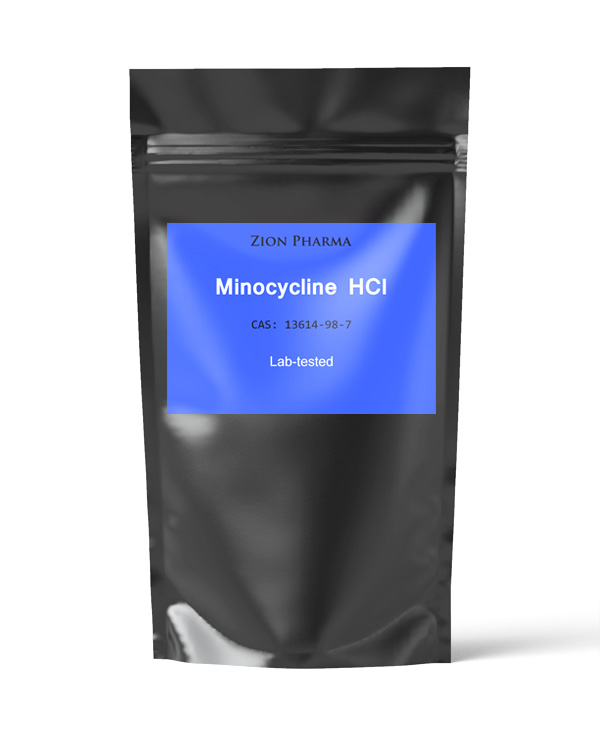
Minocycline hydrochloride
SKU: minocycline-hcl
ACTIVE INGREDIENT: Minocycline hydrochloride
ADDITIONAL INGREDIENTS: –
OTHER NAMES: KlinoMycin, Minocycline chloride, MinoMycin, NSC 141993;(4S,4aS,5aR,12aS)-4,7-Bis(diMethylaMino)-3,10,12,12a-tetrahydroxy-1,11-dioxo-1,4,4a,5,5a,6,11,12a-octahydrotetracene-2-carboxaMide hydrochloride; 2-Naphthacenecarboxamide, 4,7-bis(dimethylamino)-1,4,4a,5,5a,6,11,12a-octahydro-3,10,12,12a-tetrahydroxy-1,11-dioxo-, hydrochloride (1:1), (4S,4aS,5aR,12aS)-;
CAS NUMBER: 13614-98-7
ATC CODE: A01AB23; D10AF07; J01AA08;
FORMULA: C23H27N3O7 · HCl
MOLAR MASS: 493.94 g·mol−1
ITEM TYPE: powder
QUANTITY PER PACK: 1 gram and 5 grams
STORAGE: Store in a cool and dry place (2-8°C). Keep away from direct sunlight and heat. Keep out of reach of children.
A micro spoon is added to Minocycline HCl (0.15 ml) = 50 mg (approximately).
For precise measurement, we recommend using a laboratory scale.
The product is not intended for human use. For collectors, hobbyists, education and research.
Minocycline, marketed under the name of Minocin (among others), is a tetracycline antibiotic medication used to treat several bacterial infections, including those occurring in certain forms of pneumonia. Generally less preferred than another tetracycline antibiotic compound, doxycycline, minocycline is often used for the treatment of acne and rheumatoid arthritis.
In addition to its antibiotic activity, minocycline shows a number of off-target activities, which include include inhibition of matrix metalloproteinases (MMPs), anti-inflammatory effects, antiapoptotic effects, antioxidant effects, and neuroprotective effects. Currently, it is being investigated for its potential in the treatment of neurodegenerative disorders. A study in aged mice has demonstrated significant learning and memory enhancement following the intravenous administration of minocycline.
Anecdotal reports from individuals who observe some nootropic effects in the course of minocycline treatment mention reduced need for sleep, increased mental energy and thought clarity, enhanced focus, and decreased fatigue.
Due to its antibiotic activity and overall safety profile, alternative formulations optimized for enhanced brain uptake are being investigated.
Benefits of taking minocycline
enhanced memory and learning;
decreased need for sleep;
boost in mental energy-boosting;
increased mental clarity;
enhanced focus;
counteracts mental fatigue.
Side effects
diarrhea;
drowsiness;
mouth sores;
migraines;
vomiting;
vestibular disturbances (dizziness, ataxia, vertigo, and tinnitus);
autoimmune disorders (lupus, autoimmune hepatitis);
increased photosensitivity;
allergic reactions.
It is important to note that minocycline must not be consumed past its expiration date; like other tetracyclines, it is known to degrade into nephrotoxic anhydro-4-epitetracycline.
Interactions
acitretin;
aminolevulinic acid;
BCG;
bexarotene;
cholera vaccine, live;
digitoxin;
digoxin;
ethanol;
etretinate;
fecal microbiota spores, live;
isotretinoin;
ketoconazole;
leflunomide;
levoketoconazole;
lomitapide;
methoxyflurane;
mipomersen;
mycophenolate mofetil;
mycophenolic acid;
palovarotene;
pexidartinib;
teriflunomide;
tretinoin;
typhoid vaccine, live;
vitamin A.
Contraindications
hypersensitivity to tetracycline antibiotics;
severe liver impairment.
Dosage
In infections, adult patients are directed to take 200 mg of minocycline (immediate-release formulation) at first, followed by 100 mg every 12 hours. Some patients may start at 100 mg, followed by 50 mg 4 times a day. For the extended-release formulation, the dose is usually 1 mg per kilogram (kg) of body weight once a day. Treatment typically lasts for 12 weeks.