Description
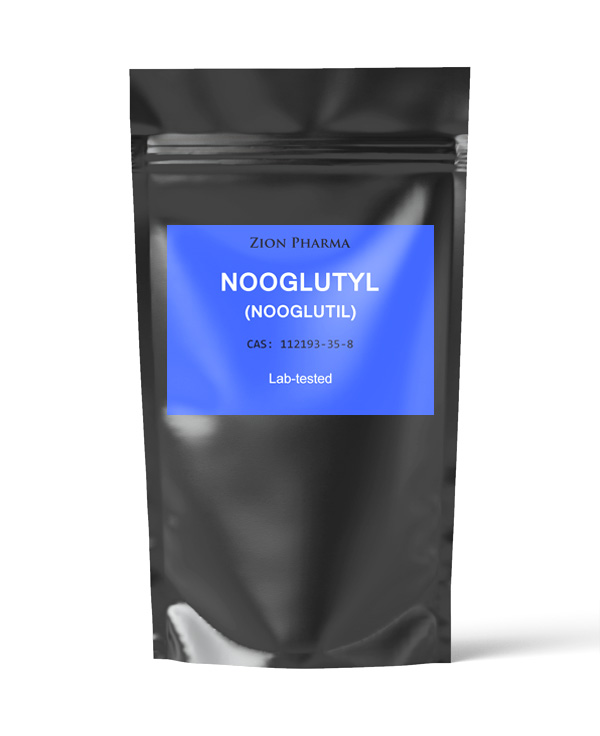
Nooglutyl (Nooglutil)
SKU: nooglutyl
For precise measurement, we recommend using a laboratory scale.
The product is not intended for human use. For collectors, hobbyists, education and research.
Nooglutyl (nooglutil, Нооглутил) is a relatively obscure nootropic compound developed in Russia, primarily investigated for its potential cognitive-enhancing and neuroprotective effects. It is a synthetic derivative of glutamic acid (hence the name) and is sometimes classified as a glutamate modulator or neuroprotector.
Nooglutyl is thought to work through multiple mechanisms, primarily through glutamatergic modulation, influencing NMDA and AMPA receptors, potentially enhancing synaptic plasticity. By improving cerebral glucose utilization and ATP production, it might support metabolism and promote healthy energy levels. Some studies suggest it reduces oxidative stress in neural tissue; based on limited evidence, it is speculated to upregulate BDNF or other growth factors in the nervous system.
While nooglutyl has been demonstrated to produce mild improvements in memory, attention, and processing speed in healthy subjects, detected effects seem relatively subtle compared to stronger nootropics (i.e., certain racetams, sunifiram, modafinil). A few Russian studies suggest it may improve focus and reduce impulsivity, possibly via glutamatergic stabilization, which benefit individuals with ADHD and Autism Spectrum Disorder (ASD).
Animal studies imply neuroprotective properties of nooglutyl and indicate its potential against dementia. In early mice studies, it has been proven to abolish amnesic effects of high-dose clonidine administered over five days and scopolamine-induced neurotoxicity. In fact, nooglutyl is likely to possess an even broader spectrum of potent antiamnesic activity. As it turns out, in a rat model of hypoxia-induced amnesia, it has been found to completely prevented its development, on par with results of another rat study in a stroke model. Additionally, nooglutyl prevented the inhibition of oxidative phosphorylation in mitochondria following craniocerebral trauma in rodents, its neuroprotective effect surpassing that of picamilon, piritinol, piracetam and pantogam.
Such impressive outcomes, however, are yet to be observed in humans. The vast majority of research data comes from pre-clinical, and or small clinical studies and their findings, and therefore would require further verification in larger-scale, double-blind trials. More robust evidence speaks in favor of nooglutyl’s role in neurorehabilitation, where it is believed to aid recovery of executive function following stroke or traumatic brain injury (TBI). It has also been proven to support memory processes in elderly patients with mild cognitive impairment.
As evidenced in further animal studies, nooglutyl exerts neuroprotective action against prenatal alcohol exposure, preventing ethanol-associated alteration of both the cortical serotoninergic and dopaminergic systems within the hippocampus, additionally normalizing dopamine release in the striatum. Conversely, it affected striatum dopamine in the opposite way in the absence of experimental interventions in the course of pregnancy.
Anecdotal reports describe a “clean” mental stimulation from nooglutyl (subtler than the effects of caffeine) and a noticeable lift in brain fog, characterized by increased awareness of their surroundings and thought clarity. Certain accounts mention positive impact of nooglutyl on verbal fluency, particularly enhanced word recall, and note an increase in working memory volume. Some of its users tend to experience slight mood-brightening effects, possibly due to glutamatergic modulation. While nooglutyl could also possess anxiolytic qualities, they are either very modest or do not exhibit interindividual consistency. That said, despite no known GABA enhancing properties, nooglutyl appears to alleviate benzodiazepine withdrawal symptoms, predominantly anxiety. Curiously enough, according to anecdotal evidence, nooglutyl is capable of inducing a mildly euphoric state, possibly via dopaminergic effects secondary to glutamate modulation. Incidentally, a rat study revealed that systemic administration of this compound at 50 mg/kg led to an increase in both the dissociation constant and the density of D2 receptors.