Description
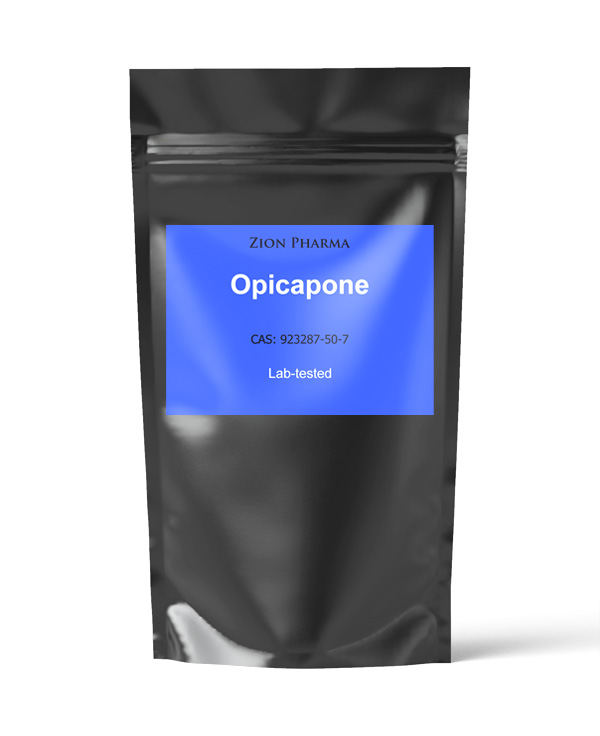
Opicapone
SKU: opicapone
A micro spoon is added to Opicapone (0.15 ml).
For precise measurement, we recommend using a laboratory scale.
The product is not intended for human use. For collectors, hobbyists, education and research.
Opicapone is a third-generation, once-daily COMT inhibitor used as an adjunct therapy to L-Dopa for Parkinson’s disease. Its key advantage is its long duration of action, providing smooth and continuous coverage, which helps reduce “off” periods—the wearing-off of the medication’s effect.
In the brain’s intricate chemistry, dopamine is the courier of smooth, fluid movement and motivation. In its decline, the messages become jumbled and slow. The primary treatment, Levodopa (L-Dopa), is a precursor, a raw material delivered to the brain to be converted into dopamine. However, enzymes called Catechol-O-methyltransferases (COMT) act like overzealous sanitation crews, breaking down L-Dopa in the bloodstream before it can even reach its destination.
Opicapone is the master strategist who disables this overactive cleanup crew. It is a potent, long-lasting COMT inhibitor. By blocking this enzyme, it allows much more of the L-Dopa to safely cross the blood-brain barrier. It doesn’t create the message (Dopamine), but it ensures the raw materials for the message get through in greater quantity and for a longer duration, smoothing out the peaks and troughs of therapy.
If L-Dopa is the vital supply convoy, Opicapone is the agent who clears the highway of checkpoints and bandits, ensuring the convoy arrives at the city gates fully intact and on a reliable schedule.
Before drugs like Opicapone, Parkinson’s patients on L-Dopa often experienced dramatic “on/off” fluctuations. Opicapone smooths this curve, providing more “on” time. Furthermore, opicapone was designed to be more potent and have a cleaner side-effect profile than its predecessors (e.g., tolcapone, which carried a risk of liver toxicity).
It is almost always used in combination with levodopa/carbidopa. carbidopa blocks one degradation pathway (peripheral DOPA decarboxylase), and Opicapone blocks the other (COMT), acting as a powerful team.
Opicapone could theoretically be investigated in in any condition where prolonging the effect of catecholamines (dopamine, norepinephrine) is desired, however, no such trials have been conducted yet.
For Parkinson’s patients, the effect can be transformative. Anecdotes often describe the return of a sense of predictability and control over one’s day. “I can plan to go out for lunch without worrying my medication will wear off mid-meal.” The subjective feeling is one of smoother motor control and reduced anxiety about the next “off” period. It doesn’t make them “smarter,” but it restores the physical platform upon which cognitive function can operate.