Description
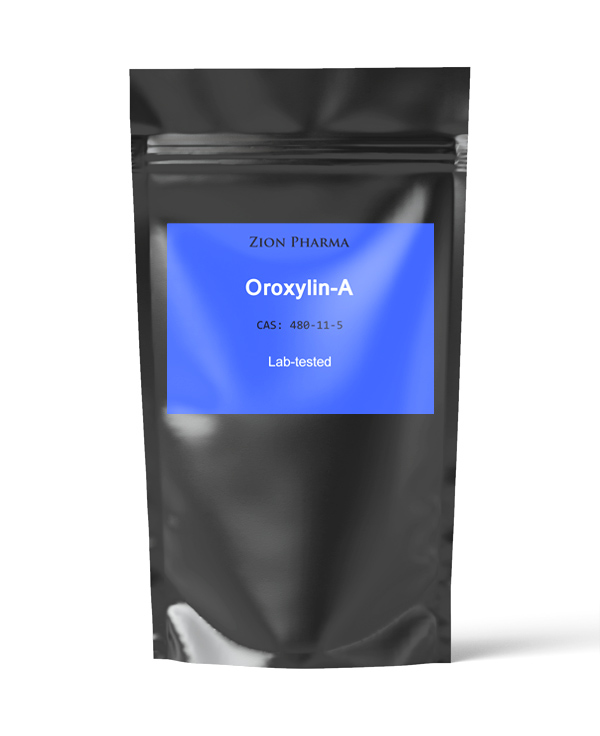
Oroxylin A
SKU: oroxylin-a
A micro spoon is added to Oroxylin-A (0.15 ml) = 40 mg (approximately).
For precise measurement, we recommend using a laboratory scale.
The product is not intended for human use. For collectors, hobbyists, education and research.
Oroxylin A is a flavonoid compound primarily found in oroxylum indicum (Indian trumpet flower) and scutellaria baicalensis (Chinese skullcap). While this naturally occurring compound has a history of traditional medicinal use that dates back to approximately 5 000 years, only over the recent years has it attracted the attention of biomedical science, inspiring studies that explore its anti-inflammatory and anti-carcinogenic potential. So far, its research has yielded promising results, as oroxylin A has been found to inhibit tumor cell proliferation and migration and modulate diverse oncogenic signaling pathways, and might therefore play a role in cancer prevention and treatment. Currently, it is also being studied for its ameliorating effect on scopolamine-induced memory impairment in mice. Flavonoids like oroxylin A are also known for their antioxidant properties, which means they can neutralize free radicals and other harmful molecules; as it turns out, oroxylin A has been found to exhibit impressive anti-inflammatory activity, mainly through inhibiting the activation of a crucial pro-inflammatory factor, NF-κB. In fact, it might be particularly effective against oxidative stress caused by the infamous protein Aβ. According to recent findings, oroxylin A might exert neuroprotective action by employing powerful mechanisms, inducing BDNF expression on cortical neurons through adenosine A2A receptor stimulation, which translates into enhanced memory consolidation, as evidenced in mice studies. Adenosine receptors play a crucial role in regulating fundamental brain functions, including synaptic plasticity, neurotransmitter transport, and astrogliosis, primarily through the mechanism of receptor dimerization. It is noteworthy that heterodimers of A2A receptors and dopamine D2 receptors may be present within the striatal GABA pathways. The activation of A2A receptors appears to exert an inhibitory effect on the action of D2 receptors. Consequently, the A2A has led to significant outcomes.
The receptor-induced attenuation of D2 receptor signaling results in an enhancement of GABA neurotransmission activity.
This phenomenon may offer innovative therapeutic strategies for the treatment of Parkinson’s disease, schizophrenia, and addiction. Further investigations are necessary to ascertain whether oroxylin A has the potential to modulate the pathophysiology of these disorders. By inhibiting COX2 expression and PGE2 synthesis, it attenuates neuroinflammation, subsequently leading to a reduction in the damage associated with ischemia and neurodegeneration.
In terms of immediate effects, oroxylin A modulates dopamine, serotonin, and norepinephrine systems, displaying an atypical stimulant profile. As a naturally occurring compound, it acts as a relatively powerful dopamine reuptake inhibitor. Its modest noradrenergic effects make it a “low-key”, subtle stimulant virtually devoid of undesirable peripheral arousal, offering clear-headed, wakeful state of mind without jitteriness. Anecdotal accounts suggest it may help with racing thoughts, enhanced focus, and reduced distractibility. Some users report improved task persistence and reduced mental fatigue—those effects, however, tend to be less pronounced than with amphetamine or methylphenidate. Oroxylin A is believed to improve verbal fluency and memory recall, possibly due to BDNF enhancement. While it is a mild CNS stimulant with a promising safety profile and low side effect incidence rate, it should be noted that it acts as a negative allosteric GABA-A modulator (particularly α1/α5 sub-units), and as such may enhance alertness and cognition but could also potentially exacerbate preexisting anxiety, albeit to a lesser extent than traditional stimulants.