Description
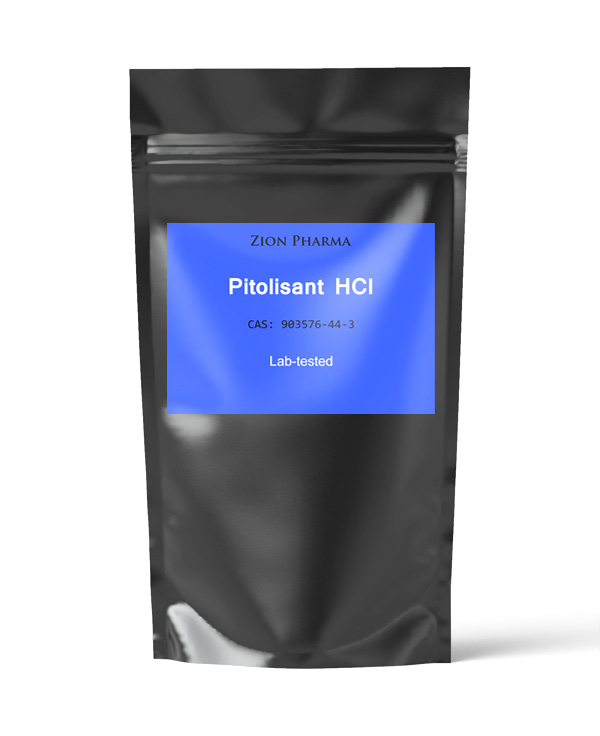
Pitolisant HCl
SKU: pitolisant
A micro spoon is added to Pitolisant (0.025 ml).
For precise measurement, we recommend using a laboratory scale.
The product is not intended for human use. For collectors, hobbyists, education and research.
Pitolisant, introduced to the market as Wakix®, is a medication primarily used to treat excessive daytime sleepiness (EDS) and cataplexy in adults with narcolepsy, and as such is considered a first-in-class drug with a unique mechanism of action. Unlike classic CNS stimulants (i.e., methylphenidate, amphetamine salts) or and wakefulness promoting agents akin to modafinil and its analogues, it exerts its action primarily via selective histamine H₃ receptor antagonism. Instead of directly stimulating wakefulness, it enhances histamine release in the brain by blocking its H₃ autoreceptors. Given that histamine actually is a key wakefulness promoting neurotransmitter, pitolisant improves alertness, unburdened by the most common side-effects of its predecessors – jitteriness or addiction.
Pitolisant has also been investigated for the treatment of excessive daytime sleepiness due to obstructive sleep apnea. It has been found to be generally well-tolerated compared to traditional narcolepsy drugs, from which it also differs in that it does not carry the risks of abuse or dependence (an important point of consideration when it comes to alternatives such as methylphenidate or, to a lesser extent, modafinil).
It has also been shown to improve daytime sleepiness without worsening motor symptoms in patients with Parkinson’s Disorder. Furthermore, early studies suggest therapeutic potential of pitolisant in ADHD, indicating that histamine modulation may help focus (which in fact might explain favorable outcomes achieved in some patients with modafinil). For individuals with ADHD and a history of substance use disorders, pitolisant might have the potential to be the true game- changer due to the subtlety of its mechanisms of action. Whereas it has been found to enhance dopamine release in the prefrontal cortex, it does not affect the brain regions associated with reward like the nucleus accumbens in the same manner, offering the advantages of executive function enhancement without the risk of addiction.
In fact, early trials show potential adjunctive benefit of pitolisant in treatment-resistant depression, possibly via its histaminergic and dopaminergic effects. With a 2021 pilot study results suggesting improvement in motivation, and alertness, and recent findings that implicate the involvement of histamine in the complex processes of memory and learning, it is speculated that pitolisant might enhance and complement the effects of SSRI/SNRI drugs. Recent animal studies show improved working memory with H3 antagonists; histamine has also been demonstrated to boost hippocampal acetylcholine. It is because of findings such as these that pitolisant is sometimes discussed in biohacking and nootropic circles for its wakefulness and memory-enhancing effects. It is being pointed out that, unlike standard stimulants, pitolisant might promote a certain degree of mental clarity without overstimulation or anxiety.
Many autistic individuals struggle with excessive daytime sleepiness and brain fog, which, according to some studies, could be due to low histamine in autistic brains. In fact, some clinicians already prescribe pitolisant off-label for ASD-related fatigue, with mixed but generally promising results. In terms of adverse effects, pitolisant displays an impressively safe profile, which is particularly apparent as far as cardiovascular healthcare is concerned. As a “smart drug” its only downsides are price and a lack of immediate effects, as it takes up to a couple of weeks for its full effects to unfold.