Description
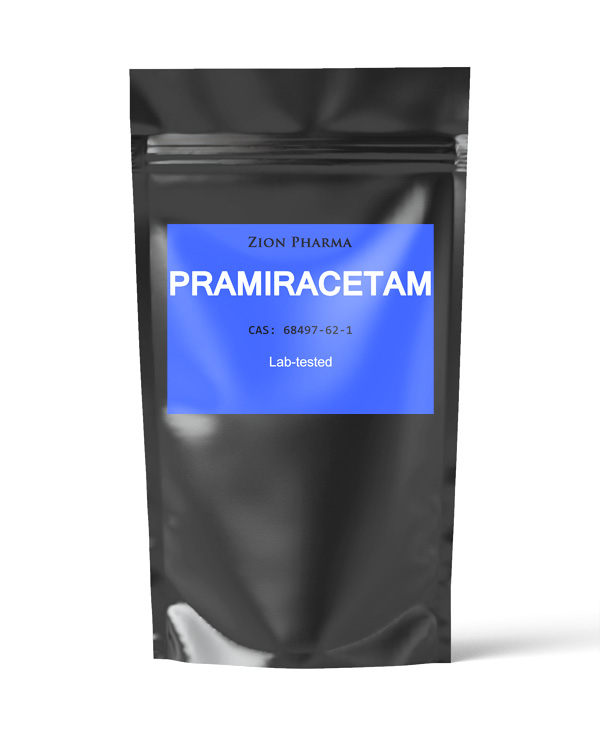
Pramiracetam
SKU: pramiracetam
For precise measurement, we recommend using a laboratory scale.
The product is not intended for human use. For collectors, hobbyists, education and research.
Pramiracetam is a potent nootropic compound belonging to the racetam family, known for its cognitive-enhancing properties. Originally developed by by scientists at Parke-Davis, at that time a division of Warner-Lambert, in the late 1970. Its initial clinical trials in Alzheimer’s disease failed to meet its goals. It was, however, proven to be effective in the treatment of memory and attention deficits in aging people with neurodegenerative and vascular dementias, and is currently marketed with these indications by Menarini under the brand name Pramistar in Italy and some Eastern European countries. Sometimes, it is also used off-label for neurodivergent conditions like ADHD, autism spectrum disorder (ASD), and comorbid conditions such as depression and anxiety. Pramiracetam is estimated to be ca. 30 times more potent than piracetam, with a stronger focus on memory and mental energy.
Pramiracetam’s effects are thought to stem from multiple mechanisms. Its cholinergic modulating properties are believed to be crucial for memory and learning enhancement observed with this compound – it stimulates acetylcholine (ACh) synthesis and utilization via high-affinity choline uptake (HACU) potentiation. It is also known to increase cerebral blood flow, improving oxygen and glucose metabolism in the brain. Furthermore, it may promote neuroplasticity via AMPA receptor sensitization. Through anti-oxidant action and mitochondrial function support, it might offer some neuroprotective effects as well. While it remains debatable, some evidence suggests indirect dopaminergic and noradrenergic modulation, which could explain its reported motivational and focus-enhancing effects.
Studies suggest it improves memory consolidation and recall, particularly in age-related or injury-induced cognitive decline. Its users often report heightened concentration and reduced brain fog, possibly due to cholinergic and AMPA effects. Some evidence indicates it may improve information processing, particularly in fatigued or cognitively impaired individuals. While some empirical data implies neuroprotective effects in traumatic brain injury (TBI), more evidence is needed to assess validity of these findings.
Anecdotally, some pramiracetam users find it helpful for focus and working memory, reducing brain fog and improving verbal fluency and recall. Unlike traditional stimulants, it produces a clear-headed state of mind characterized by sharpened focus without accompanying sympathomimetic effects and ensuing physiological stress and anxiety. It seems to share some qualities of PRL-8-53, albeit they manifest in a more subtle way, and might be less apparent in subjective experience. While it enhances motivation and task persistence, these advantages appear to stem from its pro-cognitive action and are particularly prominent in complex tasks that could otherwise be overwhelming due to perceived mental effort. As noted by some users, its headspace facilitates careful consideration and matter-of-fact, unbiased thinking. Its emotion suppressing effects do not result in an apathetic, disengaged attitude, but rather support mental clarity, cognitive flexibility, and a non-judgmental disposition that encourages lateral thinking. By reducing internal noise, pramiracetam might indirectly work in favor of stress resilience, and its beneficial impact on analysis and thought organization could potentially make it a valuable ally against depression and anxiety, working in favor of self-awareness, and increasing resistance against self-defeating and catastrophic thoughts. Mild might mood brightening effects are also likely to be secondary to cognitive improvement and greater sense of agency following its realization.