Description
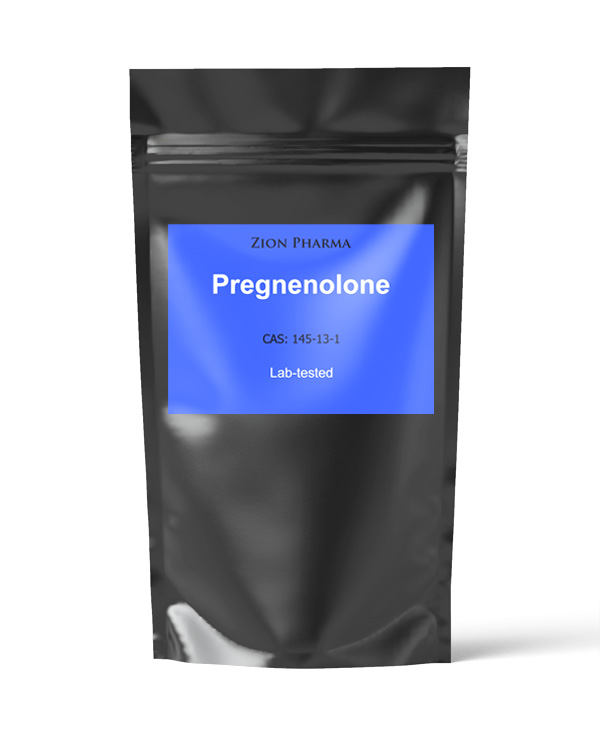
Pregnenolone
SKU: pregnenolone
A micro spoon is added to Pregnenolone (0.15 ml) = 60mg (approximately).
For precise measurement, we recommend using a laboratory scale.
The product is not intended for human use. For collectors, hobbyists, education and research.
Pregnenolone is classified as a steroid hormone and serves as a natural precursor for the synthesis of various steroid hormones, notably including testosterone and estrogen. The compound is synthesized from cholesterol and subsequently transformed into another steroid hormone known as prasterone, or dehydroepiandrosterone (DHEA). This precursor is further metabolized into estrogens and testosterone. This substance serves as a precursor to the hormones associated with stress, namely cortisol and corticosterone.
The human body naturally synthesizes this substance through the adrenal glands, gonads, and the brain. However, its production diminishes with advancing age or as a result of prolonged stress exposure. Consequently, its supplementation has the potential to alleviate symptoms associated with menopause and andropause. Furthermore, certain studies indicate a beneficial effect on the severity of symptoms associated with premenstrual syndrome (PMS). Pregnenolone exhibits the capacity to extend the duration of the deep sleep phase. The significance of this phenomenon lies in the fact that the growth hormone, a crucial factor in the restoration of cellular health, is secreted during this particular phase of sleep. Consequently, the administration of pregnenolone facilitates the restorative processes within the organism. Moreover, this compound exerts a direct effect on brain function; notably, it is synthesized in small quantities within the brain itself. The supplementation enhances the processes involved in the formation of new nerve cells and the establishment of connections between these cells. Consequently, this results in a notable enhancement of cognitive capabilities. The substance exhibits regulatory effects on the activity of significant neurotransmitters, which, for example, enhances the speed of information transmission within the central nervous system. Finally, a correlation has been identified between low mood and a decrease in blood pregnenolone levels. Participants in clinical trials who supplemented with this compound exhibited enhancements in mood and a decrease in stress levels. Nevertheless, empirical investigations into this phenomenon remain pending.
In the field of cosmetics, pregnenolone is utilized in the form of esters. The derivatives of this compound that are classified as synthetic esters encompass pregnenolone acetate and pregnenolone succinate. Pregnenolone acetate, chemically designated as 3-acetate, pregn-5-en-3beta-ol-20-one, exhibits notable properties that contribute to the reduction of wrinkles and the mitigation of aging effects. The enhancement of nutrient delivery to the skin cells is observed. Consequently, this substance is frequently incorporated into cosmetic formulations specifically designed for mature skin, particularly in the context of topical creams. Pregnenolone succinate, also known as pregnenolone hemisuccinate or pregn-5-en-3beta-ol-20-one 3beta-(hydrogen succinate), exhibits notable anti-inflammatory properties. In the field of cosmetics, this substance is employed as a therapeutic agent, predominantly in topical formulations aimed at addressing various dermatological conditions, including allergies, pruritus, and inflammation.
A certain quantity of pregnenolone is produced by the brain. Empirical evidence indicates that this neurosteroid plays a crucial role in the appropriate development and functioning of the central nervous system. It has been demonstrated that this factor facilitates the migration of newly produced nerve cells to their designated brain structures. Furthermore, it facilitates the process of myelination, which involves the formation of the myelin sheath surrounding axons, thereby enhancing the speed and precision of signal transmission. Finally, it plays a crucial role in the regulation of key neurotransmitters, including GABA, dopamine, and acetylcholine. Consequently, pregnenolone demonstrates efficacy in supporting cognitive functions, as well as enhancing the processes of information acquisition and transmission.
Observations indicate a correlation between the reduction of pregnenolone levels and the manifestation of diminished mood states. Experiments conducted utilizing animal models have substantiated the hypothesis that this prohormone has a positive effect on mood enhancement. Following this initial finding, subsequent clinical trials have consistently reproduced the same outcome. Participants in the study who received pregnenolone supplementation exhibited enhancements in psychological well-being alongside a reduction in anxiety levels. It is plausible that this phenomenon arises from the capacity of pregnenolone to promote neurogenesis, a process frequently diminished in individuals who endure severe or persistent mood disturbances. Finally, additional research has indicated that pregnenolone possesses the capacity to reduce cravings for alcohol.
The concentration of blood pregnenolone exhibits a decline as individuals advance in age. In young women, levels can attain a maximum of 230 ng/dl, while in young men, the upper limit is observed at 200 ng/dl. In individuals aged 60 years and older, there is a notable decline in its level, which decreases to approximately 40 ng/dl. Consequently, addressing this deficiency constitutes a component of various strategies aimed at alleviating the symptoms associated with menopause, particularly through the application of bioidentical hormone replacement therapy. The administration of pregnenolone facilitates the provision of a crucial precursor necessary for the synthesis of estrogen within the organism. Research is currently underway to investigate the potential of this prohormone as a therapeutic agent for alleviating the severity of premenstrual syndrome (PMS). Preliminary findings indicate a positive trend in efficacy. Additionally, males may experience advantages from supplementation, as it serves as a precursor to testosterone.
The influence of pregnenolone manifests throughout the entire organism. Research utilizing both animal models and human participants has demonstrated a correlation between this prohormone and the prolongation of slow wave sleep. During this particular phase of sleep, there is a significant secretion of growth hormone, a crucial factor that facilitates repair processes within cells and tissues. Consequently, pregnenolone plays a significant role in enhancing the body’s regenerative processes. Reports indicate the presence of beneficial effects associated with a condition known as adrenal fatigue, which emerges in relation to the experience of chronic stress. The phenomenon arises when the adrenal glands synthesize an excessive amount of hormones commonly referred to as “stress hormones,” including cortisol. The underlying mechanism through which pregnenolone exerts a beneficial effect on this condition remains inadequately elucidated.