Description
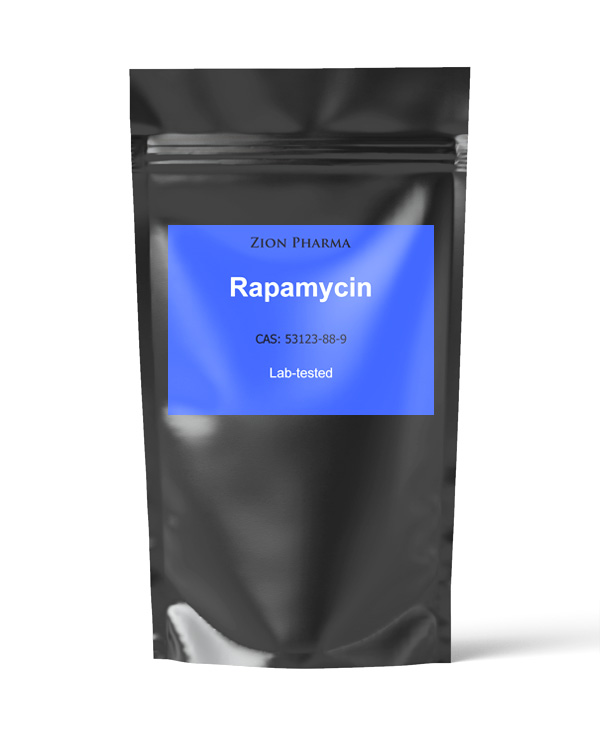
Rapamycin
We store our Rapamycin at about -15°C.
SKU: rapamycin
A micro spoon is NOT added to Rapamycin.
For precise measurement, we recommend using a laboratory scale.
The product is not intended for human use. For collectors, hobbyists, education and research.
In the galaxy of our products, space is claimed by stars. Now, it is our privilege and honor to welcome rapamycin, one of the brightest, timeless shards of inspiration that lays at the heart and foundation of our initiative.
First isolated in 1964 from soil on Easter Island (Rapa Nui), brought to life by a bacterium Streptomyces hygroscopicus, rapamycin takes its name after the island of its birth. It was initially developed as an antifungal agent.
It was approved by the FDA in 1999 for use in preventing organ transplant rejection. Later, it was also approved for use in coating coronary stents to prevent restenosis (re-narrowing of arteries). Rapamycin’s mechanism is uniquely complex and targeted, which explains its diverse effects. Its primary mechanism of action is the specific inhibition of a protein kinase called the mammalian Target of Rapamycin (mTOR). Rapamycin primarily inhibits the mTOR Complex 1 (mTORC1). mTOR is a master regulator of cell growth, proliferation, motility, survival, protein synthesis, and autophagy. It acts as a central sensor for nutrient and energy availability and growth factors.
It acts a immunosupprestant by Inhibiting T-cell and B-cell activation and proliferation in response to antigenic stimuli. Halting the cell cycle, it preventins the growth of certain cancer cells and vascular smooth muscle cells (hence its use in stents).
To sum up its current clinical applications, rapamycin is widely used in kidney transplants, often in combination with other immunosuppressants. Its current clinical indications are mainly prevention of organ transplant rejection, coronary stent coating (drug-eluting stents to prevent scar tissue from re-blocking arteries), treatment of lymphangioleiomyomatosis (a rare lung disease known as LAM), and certain tumors, such as in patients with tuberous sclerosis complex (TSC).
However, it is its potent immunosuppressive and antiproliferative properties that soon became the focus of research. Rapamycin has been found to promote autophagy – the cellular “housekeeping” process where damaged components are recycled, which is a key mechanism implicated in longevity and neuroprotection. Furthermore, it has beneficial metabolic effects, as it influences glucose metabolism and insulin sensitivity. Many studies, some of which surprising and groundbreaking, have made it a Gold Standard in geroscience, and the most robust and reproducible pharmacological intervention to extend lifespan and healthspan in model organisms, from yeast and worms to mice. By inhibiting mTOR, it mimics the lifespan-extending effects of caloric restriction, promoting cellular repair processes (autophagy) and reducing inflammation. A large-scale study is actively investigating the effects of low-dose Rapamycin on the health and lifespan of dogs, with implications for human medicine and, so far, promising results.
Research suggests mTOR hyperactivation is a feature of Alzheimer’s and other neurodegenerative diseases. Rapamycin has been shown to reduce toxic protein aggregates (amyloid-beta and tau) in animal models and improve cognitive function. It is also suggested that it might enhance cognitive function by improving the brain’s ability to adapt and rewire. Studies indicate that through its metabolic effects, it can improve metabolic function and insulin sensitivity, even in aged models. Beyond transplant rejection, it’s being investigated for various autoimmune conditions due to its targeted immunomodulatory effects.
While it suppresses the immune system in a clinical transplant context, low-dose, intermittent administration (the paradigm being explored for longevity) appears to potentially enhance immune function in older subjects by rejuvenating the immune system and improving vaccine response. It couldn’t possibly be emphasized enough, that it is not a simple nootropic, or “casual” cognitive supplement, but a powerful prescription drug with a significant side effect profile. Its use for off-label purposes like longevity or cognitive enhancement is strictly experimental and should only be undertaken with rigorous medical supervision, regular bloodwork, and a deep understanding of the risks.