Description
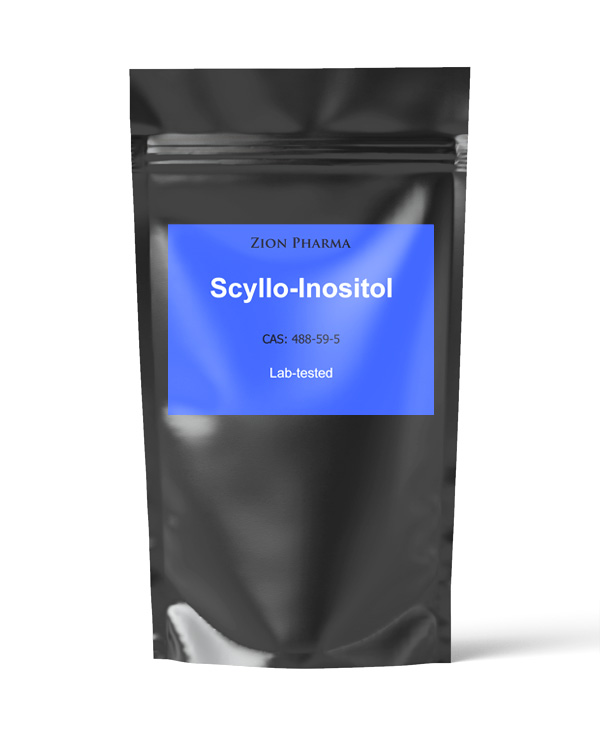
Scyllo-Inositol
We store our Scyllo-Inositol at a temperature of about -15°C.
SKU: scyllo-Inositol
Quercinitol; Scyllitol; 1,3,5/2,4,6-cyclohexanehexol; (1R,2R,3R,4R,5R,6R)-cyclohexane-1,2,3,4,5,6-hexol; ELND005; AZD-103
A micro spoon is added to scyllo-Inositol.
For precise measurement, we recommend using a laboratory scale.
The product is not intended for human use. For collectors, hobbyists, education and research.
Scyllo-Inositol is a stereoisomer of the common sugar alcohol Inositol. It has been extensively investigated in pre-clinical and clinical trials for Alzheimer’s disease due to its ability to inhibit the toxic aggregation of Amyloid-beta peptides and reduce associated cognitive deficits. It represents a “disease-modifying” approach, aiming to target the underlying pathology itself.
In the shadowy realms of certain neurodegenerative diseases, a sinister process unfolds. Proteins like Amyloid-beta, which have normal functions, begin to misfold and clump together into toxic oligomers and plaques. These clumps are like rogue factions that disrupt cellular communication and incite inflammation, poisoning the environment.
Scyllo-Inositol is a diplomatic envoy sent to this troubled region. Its unique structure allows it to interact directly with these Amyloid-beta oligomers. It doesn’t destroy them outright; instead, it intervenes at the earliest, most critical stage. It prevents the small, toxic clusters from forming and from synapsing with, and disrupting, healthy neurons. It promotes stability in a chaotic system. It is the skilled negotiator who walks into a room where factions are just beginning to arm themselves. She doesn’t launch an attack; she talks, she de-escalates, she prevents the formation of the hostile mob in the first place, allowing the ordinary citizens of the brain to go about their business in peace.
Scyllo-Inositol’s power is one of structural mimicry. The toxic Amyloid-beta oligomers have a specific shape that allows them to bind to neurons and disrupt synaptic function. Scyllo-Inositol is a “molecular chaperone” that fits into this process. It is believed to either bind directly to the oligomers, preventing them from adopting the toxic conformation, or occupy the binding sites on neurons, blocking the oligomers from attaching. It stabilizes the entire system, reducing synaptic toxicity and the subsequent inflammatory cascade.
Interestingly enough, it is an inositol stereoisomer, meaning it has the same chemical formula as the common myo-inositol (used for PCOS, mood) but a different 3D arrangement. This small change makes all the difference in its biological activity.
In fact, scyllo-inositol showed immense promise in animal models of Alzheimer’s. However, a large Phase III clinical trial (the “NOBLE” study) failed to show significant cognitive benefits in patients with mild-to-moderate Alzheimer’s. This highlights the immense difficulty of translating neuroprotective effects from animals to complex human disease.
Scyllo-inositol is found in coconut milk and palm trees, which fueled some of the initial anecdotal and cultural interest.
Anecdotal data is sparse and conflated with other inositols. In the nootropic community, where it was briefly popular, reports were subtle and mixed. Some users reported a vague sense of “mental clarity” or “reduced brain fog,” which aligns with its proposed anti-aggregation mechanism. It is speculated that it could help protect against age-related cognitive decline by combating the low-level, chronic formation of toxic protein aggregates.