Description
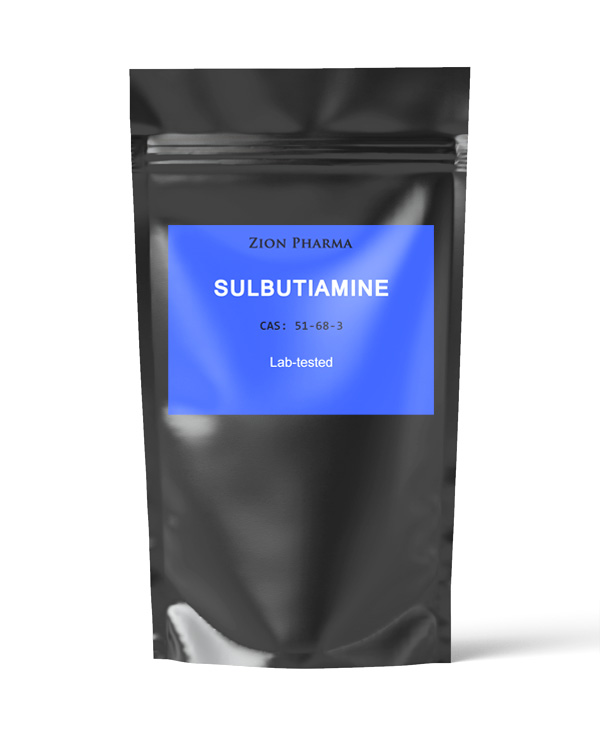
Sulbutiamine
SKU: sulbutiamine
For precise measurement, we recommend using a laboratory scale.
The product is not intended for human use. For collectors, hobbyists, education and research.
Sold under the brand names Arcalion, Enerion, and Sulbuxin, sulbutiamine a synthetic derivative of thiamine (vitamin B1). As prescription medication, it is indicated for the treatment of thiamine deficiency, fatigue, asthenia, overwork, apathy, depressive states, memory disorders, and iatrogenic disorders of wakefulness (a recognized phenomenon of sleep disturbances caused by medical interventions).
Originally developed as a highly bio available thiamine variant tailored for effective management of thiamine deficiency, it has gained attention for its nootropic, mood-enhancing, and neuroprotective properties. Thanks to enhanced lipophilicity, sulbutiamine is able to cross the blood-brain barrier more efficiently than its parent compound. Via thiamine-dependent enzyme modulation, it increases cortical cholinergic and dopaminergic transmission, and it might support neuroplasticity through glutamatergic signaling enhancement at NMDA receptor sites as well as correct mitochondrial dysfunction linked to thiamine metabolism, whilst its thiamine pyrophosphate-dependent pathways are believed to take care of neurons’ energetic demands by stimulating neuronal ATP production.
While its action is often experienced as somewhat stimulating, and certain individuals report a boost in processing speed and improved reaction time, it remains unclear whether it is particularly helpful in alleviating drowsiness. It is also used to treat thiamine deficiency and poor concentration. Its well-balanced blend of cholinergic and dopaminergic effects in the areas of focus and memory make it versatile nootropic, a popular study aid with an extra edge in mood and motivation. As a thiamine analogue, it has positive impact on physical energy levels, as can be attested by some endurance athletes, who use it for its performance boosting properties. It has also recently been studied for its potential in treating peripheral neuropathy, particularly in individuals with diabetes – so far, results encourage further research.
One question in particular is often asked with regard to sulbutiamine: is it indeed a nootropic in the sense that it supports and enhances healthy cognition, or perhaps its purported nootropic benefits might be understood and defined strictly in terms of particularly efficient thiamine deficiency correction? After all, those who experience substantial cognitive improvement could potentially be dealing with its subclinical presentation, just like its prolonged use may to tolerance development and diminished response over time, with its effects being most apparent when used on as-needed basis because in the former case optimal thiamine levels are achieved and sulbutiamine already did its job, while in the latter thiamine levels would fluctuate.
The truth appears to lie somewhere in-between; while sulbutiamine seems to improve cognition in a most consistent and pronounced manner in subclinical manifestations of thiamine deficiency, it may upregulate thiamine-dependent enzymes even in replete individuals, providing transient cognitive benefits.
Certain reports suggest that it might address the symptoms of executive dysfunction, eliminating brain fog, enhancing mental stamina, and facilitating flexible task switching. Its wide array array of dopamine-mediated enhancements goes far beyond that, as according to some accounts it is a valuable ally against procrastination, and through dopamine receptor sensitization counteracts apathy and anhedonia in depression.
It should be noted that anecdotal evidence indicates that sulbutiamine could potentially destabilize mood in preexisting bipolar disorder or trigger the onset of mania in individuals predisposed towards the said condition. While no large-scale studies verified this hypothesis formulated in clinical practice, case reports relevant to the subject can be found in literature, and based on current state of knowledge, sulbutiamine’s potent dopaminergic action is likely to be the culprit. Another area of concern is linked to its glutamatergic action and its potential to lower seizure threshold in susceptible individuals.