Description
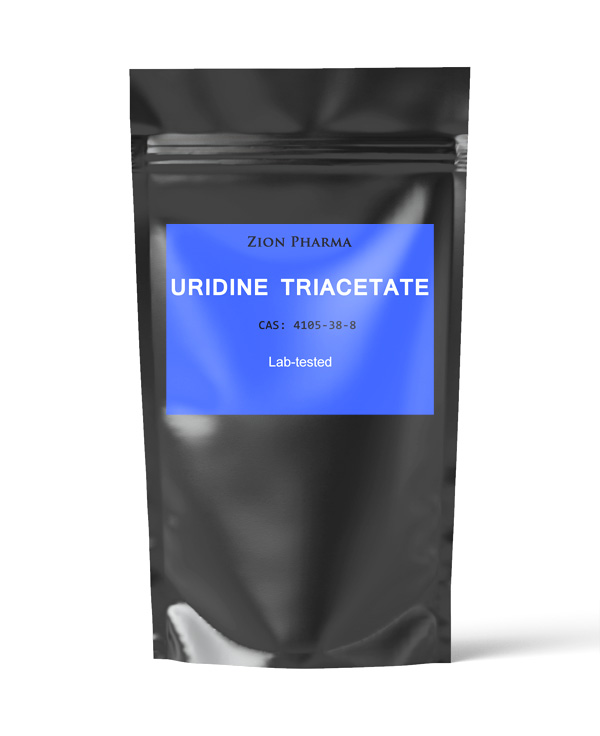
Uridine triacetate
SKU: uridine-triacetate
For precise measurement, we recommend using a laboratory scale.
The product is not intended for human use. For collectors, hobbyists, education and research.
Uridine TAU (triacetyluridine) is the most absorbable form of uridine, an organic substance belonging to the class of nucleosides. It is synthesized in nature as uridine monophosphate (UMP), and it is one of the four primary constituents (with adenosine, guanosine, and cytidine) of the ribonucleic acid chain. It is assimilated from the gastrointestinal system and readily dissolves in water. Uridine effectively traverses the blood-brain barrier, which is why it is frequently utilized to enhance cognitive functions. It serves as a substrate in the synthesis of phosphatidylcholine (PC) and glycogen, and is also implicated in carbohydrate metabolism. Uridine is naturally present in the human body, produced in the liver as uridine monophosphate (UMP). It is also found in food as a component of RNA. The sources of animal-origin items include beef liver, pork liver, and fish. Products of plant origin that include uridine include baker’s yeast, porcini mushrooms, champignons, broccoli, oats, Chinese cabbage, spinach, cauliflower, parsley, and tomatoes.
Uridine plays a fundamental role in the processing of genetic information stored inside cellular structures. Uridine is a component of RNA that is essential for facilitating the transmission of information encoded in DNA to proteins. In summary, this delineates the fundamental role of uridine within the organism. What is the rationale for supplementation, what is its relationship with the central nervous system? Uridine may also possess significant utility in that context. As a supplement, it positively influences the neurological system, which accounts for its extensive usage in neuroregulation.
Uridine contributes to the optimal functioning of neuronal cells. It enhances neuronal connectivity and promotes the generation of new neural cells. As consequence, neuronal transmission is rendered more efficient. Furthermore, an increased number of connections among cells enhances the capacity for memory retention. Uridine, consequently, exerts a beneficial influence on overall brain function, most notably in the realm of memory. The maintenance of optimal uridine concentrations within the central nervous system is critical for the appropriate development, functionality, and regenerative capacity of neurons. This compound serves to activate the nerve growth factor (NGF), which is a neuropeptide responsible for stimulating the formation of new nerve cells. In addition to its other functions, BGF facilitates the formation of novel synaptic connections between neurons. Research indicates that the administration of uridine supplementation is associated with an enhancement in the quantity of synapses. The phenomenon in question exerts a beneficial influence on memory efficiency, thereby facilitating the acquisition and retention of new information.
Additionally, by increasing CDP-choline synthesis, uridine plays a crucial role in the synthesis of acetylcholine, a neurotransmitter integral to the rapid processing of information that continuously transpires within the brain. Research indicates that the consumption of uridine results in an approximate 20% enhancement in the production and release of dopamine. Enhancing this domain of neural balance leads to improvements not only in memory retention but also in concentration and motivation, which are critical components for an effective learning process. Moreover, uridine has been found to boost dopamine receptor density (D2 receptors in particular) via modulation of phospholipid metabolism.
Numerous studies have demonstrated that uridine may play a beneficial role during periods of significant mood decline. In this context, it is significant to note that a notable characteristic of this compound is its enduring positive impact on the dopaminergic system. Research has demonstrated that consistent uridine supplementation enhances the sensitivity of dopamine receptors, thereby contributing to an increase in dopamine activity within the central nervous system. The consistent consumption of uridine positively influences overall mood. This chemical influences, among other factors, the action of dopamine, which is responsible for pleasure and motivation. Consequently, uridine serves as an excellent remedy that enhances optimal brain function, augments cognitive abilities, improves willingness to act, and elevates the satisfaction from one’s actions, and helps maintain an optimistic outlook on life.
What’s more, uridine modulates adenosine receptors, potentially improving alertness and reducing anxiety, and supports neurite outgrowth (via P2Y receptor activation). It stimulates phosphatidylcholine (PC) and phosphatidylserine (PS) synthesis, critical for membrane repair and facilitation of synaptic connections, and might reduce neuroinflammation via modulation of microglial activity.
Additionally, it has cardioprotective properties and supports healthy liver function. Thus, it enhances overall health and expedites healing processes. Research findings suggest that uridine supplementation facilitates the regeneration of the entire organism, particularly highlighting its effects on brain function. The enhancement of sleep quality is attributed to the facilitation of slow-wave sleep, a critical phase during which the body engages in effective resting and the natural repair mechanisms are most actively engaged. Furthermore, uridine plays a significant role in maintaining the integrity of cardiac muscle, particularly under conditions where the availability of glucose and oxygen is restricted. Uridine plays a significant role in mitigating the depletion of energy reserves, particularly adenosine triphosphate (ATP). Scientific research has confirmed that uridine exerts a beneficial effect on the liver, serving to protect this vital organ from the detrimental impacts of various toxins.
Animal studies show improved spatial memory and long-term potentiation (LTP) with uridine TAU supplementation. A 2014 study found uridine had antidepressant-like effects in rodents, comparable to fluoxetine; administered together with choline and DHA, it improved synaptic function in Alzheimer’s models. Anecdotal reports mention better verbal recall and mental clarity, improved working memory and smooth, jitter-free focus in ADHD,. Individuals with mood disorders tend to experience improved emotional resilience and reduced anhedonia with uridine TAU, while its neurodivergent users might also note enhanced emotional regulation, possibly due to membrane stability effects. Other commonly reported effects are better sleep quality and improved verbal fluency, analogous to the effects of racetams.