Description
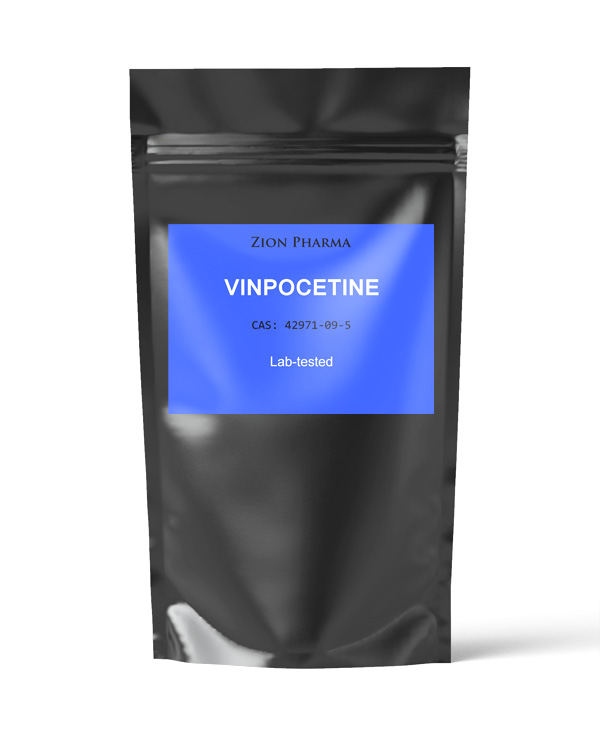
Vinpocetine
SKU: vinpocetine
For precise measurement, we recommend using a laboratory scale.
The product is not intended for human use. For collectors, hobbyists, education and research.
Vinpocetine (brand name Cavinton®), is a semi-synthetic derivative of vincamine (from the periwinkle plant) that has been used in many Asian and European countries for the treatment of age-related memory decline and cerebrovascular disorders such as stroke and dementia for over three decades. With a plethora of mechanisms of action with nootropic potential and intriguing properties, it has recently attracted the attention of neurohackers from all over the world.
Vinpocetine’s effects are multi-targeted, blending cerebral blood flow enhancement, neuroprotection, and glutamate/dopamine modulation. It promotes vasodilation by inhibitingphosphodiesterase 1 (PDE1), which in turn increases cAMP/cGMP, in a particularly prominent way in microvasculature, and through Na⁺/Ca²⁺ channel inhibition in red blood cells, blood viscosity is reduced, which further eases cerebral blood flow. Via improved CBF and mitochondrial efficiency, it enhances glucose and oxygen utilization in neurons. As an anti-oxidant, it scavenges reactive oxygen species (ROS) and inhibits lipid peroxidation. Furthermore, vinpocetine acts neuroprotective against glutamate excitotoxicity by blocking voltage-gated sodium channels and mildly inhibiting NMDA receptors. The earlier mentioned PDE1 inhibition may account for certain nootropic qualities of vinpocetine, as it is hypothesized to ndirectly boost dopaminergic signaling in prefrontal cortex. It has been demonstrated to exert anti-inflammatory action via NF-κB and IL-1β suppression, and might therefore have therapeutic effects in neuroinflammatory conditions (i.e., post-concussion, long COVID).
Vinpocetine has been used off-label in the treatment of tinnitus, for migraine prophylaxis, and cognitive enhancement. It is Through improved cerebral blood flow, and glutamate, and dopamine modulation, vinpocetine might enhance focus and support executive function in ADHD. Certain studies suggest working memory improvements in elderly; there are, also anecdotal reports of mild stimulant-like effects in ADHDobserved with this compound. Furthermore, via Na⁺ channel blockade, vinpocetine might dampen sensory overload, relatively common in autism. As per anecdotal evidence, it seems to reduce auditory hypersensitivity and tinnitus (linked to its vascular effects of vinpocetine), and might therefore relieve the symptoms of misophonia. In Eastern European countries, it is sometimes prescibed for vestibular migraines, where it is also introduced in some cases of traumatic brain injury, as it is believed to facilitate recovery and reduce brain fog.