Description
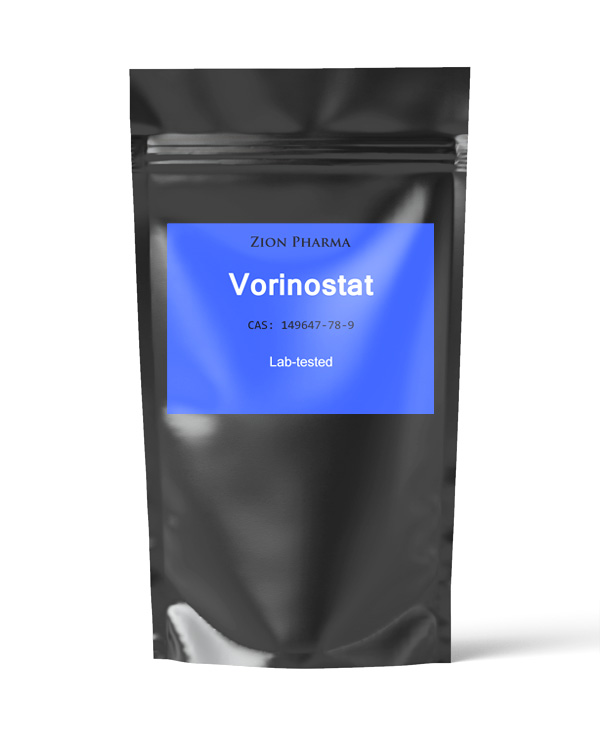
Vorinostat
We store our Vorinostat at about -15°C.
SKU: vorinostat
A micro spoon is added to Vorinostat (0.15 ml) = 40 mg (approximately).
For precise measurement, we recommend using a laboratory scale.
The product is not intended for human use. For collectors, hobbyists, education and research.
Vorinostat was historically the first histone deacetylase (HDAC) inhibitor to be approved by FDA for the treatment of cutaneous T cell lymphoma. It is also used in combined treatment of certain other types of cancer, as it has been found to synergize well with different classes of anti-cancer drugs. In fact, it is constantly being investigated for a variety of cancer-related conditions.
Interestingly enough, there are natural compounds with HDAC inhibiting qualities and proven nootropic properties, i.e., resveratrol, EGCG and curcumin. GHB, which happens to be a neurotransmitter, has also been shown to exhibit some marginal HDACC action.
Histone acetyltransferases are enzymes that acetylate histones to loosen the DNA from the histone, which turns the gene on and increases gene expression.
The enzymes known as histone deacetylases (HDACs) remove acetyl groups from histones, causing the DNA to wrap tightly around the histone, shutting down the gene and suppressing its expression. HDAC off and HAT on.
Class I is the main class of HDACs, and it is most relevant in terms of nootropic effects. Within HDAC class I, the HDAC1, HDAC2, HDAC3, and HDAC8 proteins are included. The Class III HDACs are the sirtuins, linked to aging, inflammation, DNA repair, the circadian clock, mitochondrial biogenesis, and more, and are unique among the HDACs because they’re not dependent on zinc.
An HDAC inhibitor can turn a gene on, but it can’t turn it back off. HDAC inhibitors keep genes from being turned off after they have been turned on, keeping them from being turned off.
The practical implications of the above mechanism of action are indeed powerful.
As it turns out, vorinostat as well as other anti-cancer drugs of its class offer their user a great learning egde, which is evident as far as making lifestyle changes, developing new habits and “un-learning” old ones is concerned.
There are anecdotal reports of people who found they were able to learn languages or an instrument in an effortless, childlike way. HDAC inhibitors like vorinostat help extinguish fear, and could potentially also work in the same manner with other similar emotions including nervousness, anxiety, and avoidance.
The key to experiencing such conditioned emotions is memory, and vorinostat doesn’t exactly overwrite the existing ones, often deeply rooted in childhood experiences – what it does, however, is helping to create new ones that hold greater subjective significance. Needless to say, such property could be invaluable in overcoming traumas.
Furthermore, there is growing scientific evidence that vorinostat might be of therapeutic utility in various disorders affecting brain, including stroke, Alzheimer’s disease, frontotemporal dementia, Parkinson’s disease, Huntington’s disease, amyotrophic lateral sclerosis, spinal muscular atrophy, X‐linked adrenoleukodystrophy, epilepsy, Niemann-Pick type C disease, and neuropsychiatric disorders.