Description
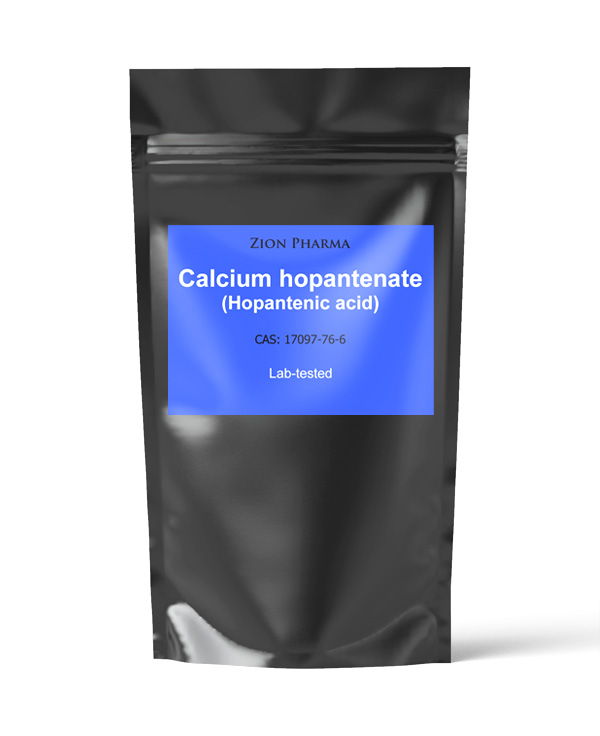
Hopantenic acid (Calcium hopantenate, Pantogam)
SKU: calcium-hopantenate
A micro spoon is added to Calcium hopantenate (1 ml) = 200 mg (approximately).
For precise measurement, we recommend using a laboratory scale.
The product is not intended for human use. For collectors, hobbyists, education and research.
Calcium hopantenate, marketed under trade names such as Pantogram and Calcium panthotenate (among others) mainly in Russia and Japan, is a nootropic drug primarily utilized for its cognitive-enhancing properties. Currently, its indications cover a wide array of conditions, including neurodevelopmental disorders like ADHD and developmental delays in children, as well as cognitive problems in adults of various etiologies, subsuming reduced blood flow to the brain due to hardening of the arteries and neurodegenerative diseases like Alzheimer’s. It is also used to treat epilepsy with intellectual disabilities along with anticonvulsants, schizophrenia with brain-related issues together with neuroleptics, and to help control tardive dyskinesia caused by neuroleptics.
First synthesized in the mid-20th century, it has since gained substantial interest in the pharmaceutical and medical research communities, becoming the subject of multiple studies aimed at understanding its precise mechanisms of action and exploring its therapeutic potential, possibly further expanding its clinical applications. While structurally similar to pantothenic acid (vitamin B5), it is uniquely tailored to readily cross the blood-brain barrier and impact the central nervous system.
The effectiveness of calcium hopantenate is attributed to its diverse method of action. This molecule influences the gamma-aminobutyric acid (GABA) pathway, which is essential for modulating neuronal excitability across the nervous system. Calcium hopantenate functions as a GABAB receptor sensitizer; hence, it augments inhibitory neurotransmission. This may result in elevated dopamine levels in the brain, correlated with enhanced mood, attention, and executive function. Calcium hopantenate also affects the metabolism of glutamate, a crucial neurotransmitter implicated in synaptic plasticity, learning, and memory. The medicine helps balance the signals that excite and calm the brain, which can prevent seizures and create a more stable brain environment, especially helpful for people with cognitive and emotional challenges. Given that GABA-glutamate imbalance has been implicated in Autism Spectrum Disorder, calcium hopantenate could potentially offer some benefit in this neurodivergent condition.
Furthermore, research indicates that calcium hopantenate may have neuroprotective characteristics. It has been demonstrated to improve the resistance of neural cells against oxidative stress and neurotoxins, prevalent in neurodegenerative illnesses. This protective effect is thought to be facilitated by its capacity to enhance the synthesis of neurotrophic factors and other essential proteins implicated in brain growth and repair.
Moreover, some studies suggest that calcium hopantenate may contribute to the augmentation of neuronal energy metabolism. It is believed to enhance the absorption and utilization of glucose by neuronal cells, thus ensuring a consistent energy supply essential for proper cerebral function. This energy enhancement can lead to enhanced cognitive performance and reduced mental fatigue.
Calcium ions are essential for various cellular functions, such as neurotransmitter release, signal transmission, and enzymatic activity. Calcium hopantenate could assist in modulating intracellular calcium concentrations, facilitating efficient and uninterrupted neural functions.
Evidence indicates that calcium hopantenate may affect the cholinergic system, augmenting the function of cholinergic neurons. Additionally, it may increase the synthesis and release of acetylcholine, potentially playing a crucial role in preserving cognitive processes and averting cognitive decline linked to aging and neurodegenerative disorders.
It has also been found to promote normalization of GABA in chronic alcohol intoxication and the subsequent discontinuation of ethanol, as well as exhibit analgesic effects.
Calcium hopantenate was able to significantly improve attention, decrease hyperactivity, and enhance overall function in children with ADHD over the course of four months (vs. placebo).