


Description
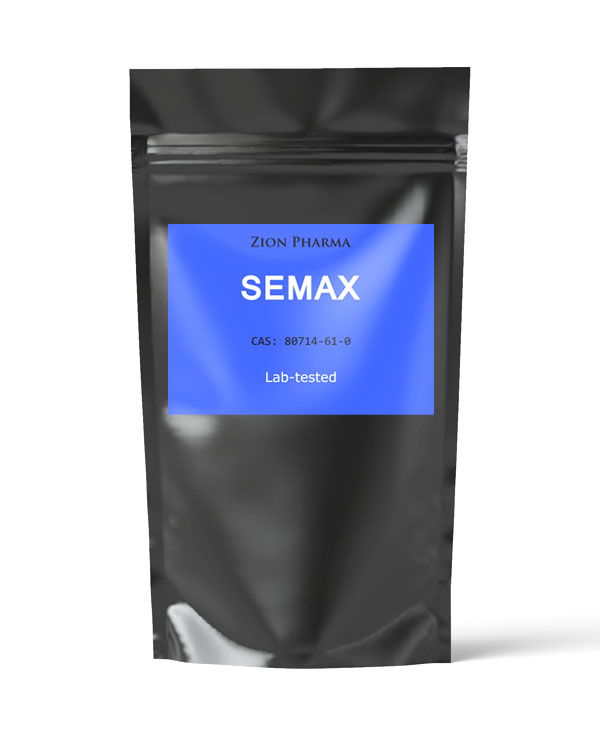
Semax vial 5 mg
SKU: semax-5-mg
A micro spoon is NOT added to Semax.
The product is not intended for human use. For collectors, hobbyists, education and research.
Semax is a pharmaceutical drug developed, produced, and marketed by Peptogen in the Russian Federation with the participation of the Institute of Molecular Genetics of the Russian Academy of Sciences. In Russia and certain Eastern European countries, it is prescribed for the treatment of a broad range of conditions, including stroke, transient ischemic attack, memory and cognitive disorders, peptic ulcers, optic nerve disease, and for immune system support.
Chemically, it is a heptapeptide and synthetic analogue of a fragment of adrenocorticotropic hormone (ACTH), ACTH (4-10), of the following amino acid sequence: Met-Glu-His-Phe-Pro-Gly-Pro (MEHFPGP in single-letter form).
Semax has been thoroughly researched in Russia and is included in the Russian List of Vital and Essential Drugs, sanctioned by the government of the Russian Federation on December 7, 2011. Although the precise mechanism of action of Semax remains ambiguous, evidence suggests it may function via melanocortin receptors. A report indicates that Semax competitively antagonizes the action of the melanocortin receptor full agonist α-melanocyte-stimulating hormone (α-MSH) at the MC4 and MC5 receptors under both in vitro and in vivo experimental conditions, suggesting it may function as an antagonist or partial agonist of these receptors. Semax did not inhibit α-MSH at the MC3 receptor; however, this receptor may still serve as a potential target for the medication. Furthermore, Semax has been demonstrated to increase cerebral blood flow. It is also believed to upregulate BDNF, GDNF, and NGF, promoting neurogenesis and synaptic plasticity; reduce oxidative stress; enhance antioxidant defense (glutathione, SOD), and modulate dopamine, serotonin, and GABA. Moreover, it has been found to inhibit nitric oxide synthesis, which can further contribute to neuroprotection.
In animals, Semax swiftly increases the levels and expression of brain-derived neurotrophic factor (BDNF) and its signaling receptor tropomyosin receptor kinase B (TrkB) in the hippocampus, while promptly activating serotonergic and dopaminergic neural systems. It has been determined to elicit antidepressant and anxiolytic effects, mitigate the behavioral consequences of prolonged stress exposure, and enhance the locomotor activity induced by D-amphetamine. Consequently, it has been proposed that Semax may be beneficial for the treatment of depression.
A 1996 study showed that doses of Semax ranging from 250 to 1000 μg enhanced attention and short-term memory in 11 healthy participants throughout 8-hour work shifts, with the most significant effects observed post-fatigue (after the shift) and persisting into the next day. In a subsequent memory assessment conducted the morning after Semax administration, the treatment group achieved a higher accuracy rate (71%) compared to the control group (41%). A 2018 study of 110 patients recuperating from ischemic stroke indicated elevated levels of brain-derived neurotrophic factor (BDNF), associated with early rehabilitation, in those treated with Semax. A 2018 study with 24 healthy volunteers showed that Semax enhances fMRI default mode network activity compared to a placebo.
According to anecdotal reports, its subjective effects are noticeable shortly after its application; the most commonly reported are increased alertness, a boost in energy, and “laser-like” focus. At higher doses, it seems to produce mild euphoria. There are additional benefits achieved with chronic use of Semax, including improved memory consolidation, enhanced mood, and reduced brain fog.
 OUT OF STOCK